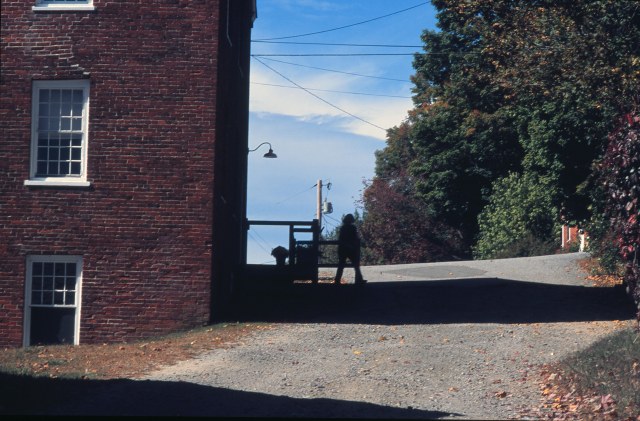
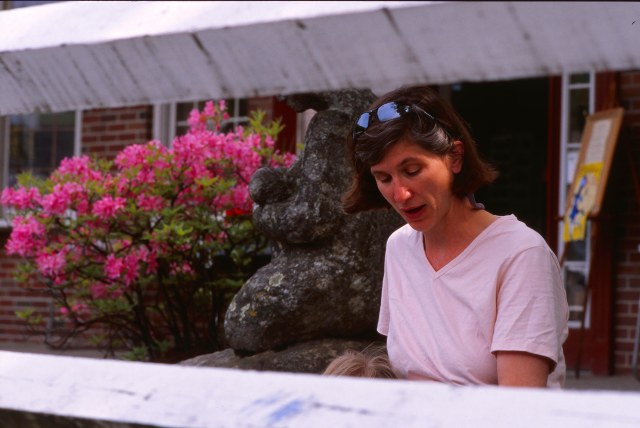
Toadstool Bookshop


MotherReading

…mother and child, reading in the Toadstool bookshop garden

Toadstool Books. Peterborough, New Hampshire. Downtown Peterborough, New Hampshire. The heart- now- of downtown Peterborough. The heart of it, at least for me. The very heart of it. At least for me. But then, I’m a writer. So books…

…they aren’t the only place you live, if you’re a writer. But if you write books, well…

How could any place, or the people who run the place, matter more to you?

And that’s still true, and that’s not to make any less important all those other equally wonderful places and people in downtown Peterborough that make it- if not unique, very unusual. This is a downtown that is still a downtown. When the general store went out complaint was made that now you couldn’t buy a pair of underpants or pantyhose anywhere in Peterborough. Yes you can- now- at Underneath It All…

Well, another subject for another time. The other wonderful places in downtown Peterborough that make it that rarest, now, of all small towns: a place where the shopping district, the stores, the services vital to getting along in life- a place to buy food, a place to buy clothing, a place to get your car fixed, a place to have breakfast, lunch or dinner- or all three-a local museum…

And for me, most important of all, a bookstore.

A big bookstore, as it turns out. The largest independent bookstore in all of New Hampshire, as it turns out- or as the page turns- as you open the Toadstool book and turn their pages.

With two branches! Also! In Keene, to the West! And in Milford, to the East! Not a chain. But they’re holding hands, so to speak.

But it was Toadstool there, at the heart of Peterborough, that along with the Unitarian Church, just down the street- beautiful building, 1825- the Unitarians had a history of slavery abolition and civil rights belief- just down the street in the heart of downtown, that made Edie and me want to move to Peterborough- or failing that (this was the height of the pre-2008 real estate boom) made us want to move to someplace nearby.

There was Toadstool, ensconced in the old A&P supermarket building on the same ground that the Boston and Maine railroad station had once stood. Imagine that, a bookstore the size of a supermarket in a town of 6000.

What kind of magic made that possible?

Well, Edie and I didn’t know, that summer day we wandered into Peterborough, wondering if this might be the place where we could move to, once Edie retired from her day job, and so setting us free, with career done, to live someplace we just wanted to live, with no thought of having to be somewhere near…

Well, that’s a big change. And you want to pick the right place. Of course it’s driven partly by economics. Santa Barbara has nicer year round weather. And in Santa Barbara-where we knew nobody- and we’ve never been there… but that was out… in Santa Barbara we couldn’t afford a doghouse. To live in.

And you know, there are parts of metro Boston where we’d have been limited to a converted two car garage. Maybe.

But that really didn’t matter. Because we both really wanted to live in the country- a small town. This was our chance to not live near a city. And in that pre-2008 real estate boom, we had to find someplace within 90 minutes travelling distance so we could look at the house before someone else closer by had already bought it the hour after it went on the market.

And I did know Peterborough and the Monadnock region. Somewhat. Because in the early days of Charles Merrill’s Commonwealth School, in Boston- I went there. Charles would have the entire school- all 100 or so of us, the four high school grades- up to his farm in Hancock, NH- not far from Peterborough- where the girls would sleep in the hayloft, the boys in the milking parlor- and never the twain shall meet. Sort of. They did- but that is another story.

So I already knew that Monadnock region. Sort of. I loved Charles’ farm. I didn’t need the barns- and he hadn’t any livestock- it was his and his wife, Mary’s- weekend and summer place.

But that south facing Cape on a hillside in New Hampshire, that part of New Hampshire…

Much as I loved Columbia, and wanted to be in New York City- I didn’t want to live in a densely urban place most of the time. I remember writing to Charles, junior year at Columbia,  that someday I hoped to have a small Cape on a south facing hillside, like his, someplace in that part of the world.

Well, with Edie retired- 45 years later- that kind of place became a possibility, and first Edie and I thought Peterborough. Maybe a house in one of its outlying residential neighborhoods.

We could walk into town to Toadstool, buy socks at the shoe store, groceries at Roy’s Market, printer paper at Steele’s Stationery… and so on. And so on…

But those Peterborough houses went faster- during the real estate boom- than you could say “I’ll buy it.”

So with Marcia Neuhardt, our realtor at Peterson Real Estate, we began looking at the surrounding towns: Hancock. Temple. Francestown.

And then this place in Dublin.

Well, that’s another story, too. But it was Toadstool Books, at the heart of Peterborough, the market town that was the commercial and service and religious center for all the surrounding, much smaller towns- and had been that center for more than 175 years- it was Toadstool that made the difference in where we wanted to live, where we wanted to be near.

Toadstool. Along with the fact that people could hold silent peace vigils on the steps of the Peterborough Town House (aka town hall) without being ejected or having too many eggs thrown at them at the height of the Bush2 imperial ascendancy- the invasion of Iraq- that convinced Edie and me that wherever we lived in that region- whichever town- we’d find friends, because it would take the kind of people we were likely to like, and for them to like us- to support a bookstore that big- named Toadstool! In that somewhat removed, off the beaten path part of the state, in that part of the country.

We didn’t yet know Holly and Willard Williams- who’d founded Toadstool. We didn’t yet have any idea that Toadstool had grown- the fungus spread! To Keene and to Milford!

But we just believed that if that place could flourish- granted it took people with Holly and Willard’s rare gift for sharing literature- then Edie and I thought we might be able to find a home, a real home where we might feel that in time we might someday belong, because some of the people we met wanted us there.

I suppose you could say we’ve become part of the fungus.  Mushrooms of words- read and written- rather than that other symbol- the mushroom shaped cloud- the opposite symbol of the peace those vigilers sought on the steps of the Peterborough Town House.

And all of us doing our best to keep it that way. Spread the spores. Dampen the ground with not hard rain but tears of joy.
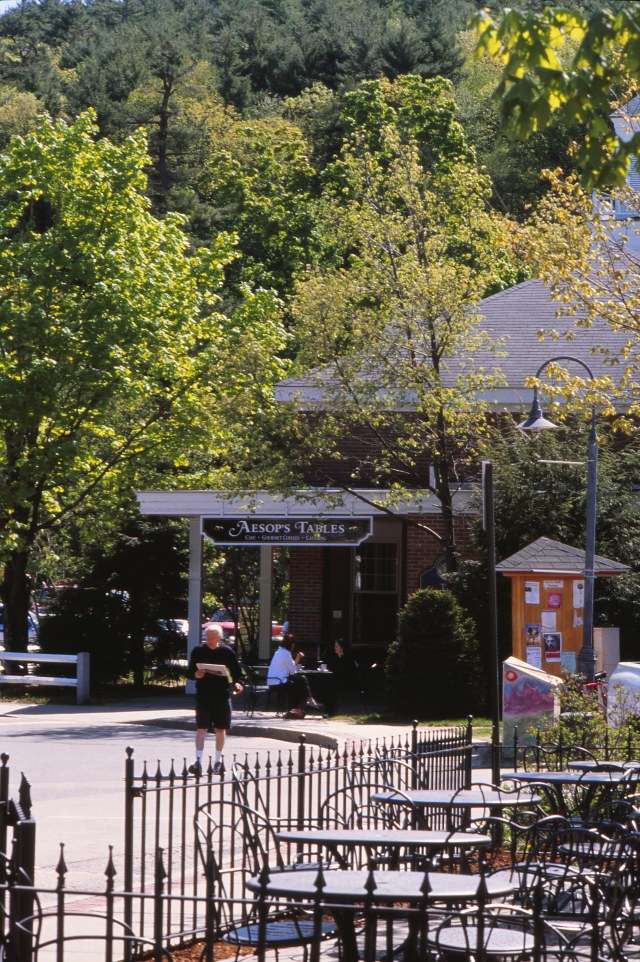
Aesops

© text and photos copyright Peter Tuttle. all rights reserved.
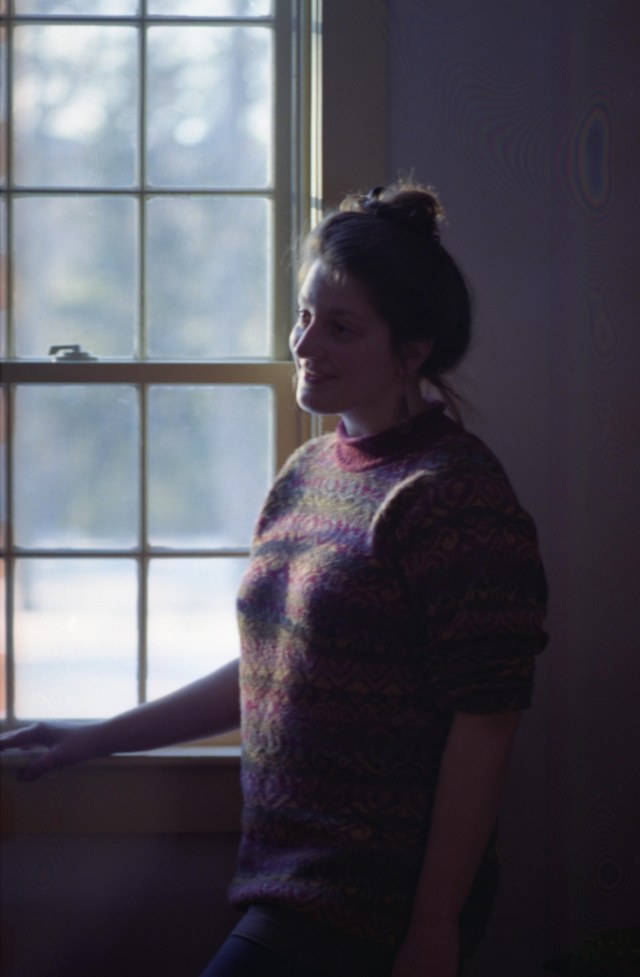
Posted in Local Heroes | Tagged , , , | Leave a comment

Miriam

MiriamWindow

The French symbol of their country is Marianne- that imaginary woman, yet real- they choose the image of a real woman- who for the French somehow represents their soul, the spirit of the French nation… it is no accident that the Statue of Liberty, given by the French to the US, is also a woman. Very feminine, yet not overtly erotic- Marianne symbolizes the soul that makes up the idea of France.

…And so maybe it’s no surprise that Harrisville, New Hampshire, that became Parisville in my fiction- The Porch of Common Prayer– also became somehow embodied- literally and figuratively- as a young lady: Miriam Sharrock, who grew up in Harrisville, daughter of Jim and Cheryl Sharrock, who still live in Harrisville. And so has Miriam, all her life- so far- except for her college years, when she lived in Keene, while getting her BA at Keene State University, where Miriam majored in music.

And how does a pretty, talented woman become somehow the symbol of a community?

Not by trying. Just by being herself. Modest, warm in spirit. Pretty, yes- all the French Mariannes have also been pretty. Or even beautiful. But some particular kind of beauty and prettiness.

And some kind of poise and presence. The poise and presence of, well, not stillness, exactly- Miriam does talk. But there’s also some kind of listening. She’s a musician and composer first- she grew up in a musical family. And while her parents teach music at Keene State- they have also performed- James, Cheryl, Miriam, and her brother, Chris- at the Harrisville Farmer’s Market, held adjacent to the Harrisville General Store..

The town just closes Vine Street (which is no big accomplishment, it’s more like a short driveway along the side of the store). -And that’s where the venders- aka local citizens who raise sheep for food and wool, and vegetables, nice to look at but also destined to be eaten- sell their produce to their fellow townspeople, and whomever else might show up and wander by. But it’s a very local production.

And there, with their backs to- and their power cord, for the electric piano plugged into- the Harrisville General Store… if you’re lucky you’ll find the Sharrock family performing.

Miriam included.

And that, I thought, was somehow magical and wonderful… this tiny town, this one step away from miniscule general store, this street that is barely a street- more like a big driveway- blocked off, for a few hours, so the townspeople could gather there, on a warm but not too warm summer evening, the sun finally setting behind the hill rising to the west…

The music echoing off the ancient brick side wall of the general store- ancient by American standards, of course. As in 1838- built yesterday if your country has a Chartres cathedral.

And the next day, and this being summer, Miriam at the store, bright and early, waiting on customers as they line up at the bakery and everything else counter for breakfast. Always pleasant, and she looks you in the eye.

And always in some way, present. And calm.

It can get hectic in that little store, not because there are crowds of people there- there aren’t- never- and never will be.  Harrisville downtown- if that’s what you’d call it- on a good day barely has parking for the people who live there and want to pick up something to go- or something to eat and or drink right there on the front porch of the Harrisville General Store, or maybe inside, at the fewer than a half dozen tables inside…

Don’t come crowding, world, to Harrisville. There’s no beach, no mountain, about one other store downtown. And no parking.

But the store- being so tiny- on both sides of the counter, does get crowded. And sometimes, by its standards- very crowded. And with that tiny kitchen in the back producing made to order meals- busy.

And yet there always was Miriam- the longest serving store employee, starting there at 16, the minimum age for working for someone else in New Hampshire. All the years to her mid 20s. Summers, weekends. Always, I think, the music- her music- in her head (is that what keeps her so calm?).

Some kind of unheard and yet visible music. That everyone heard, just by her presence.

And she’s still that way. And I don’t know how she does it. Or is it.

But it does kind of explain why, now as a therapeutic masseuse, with her own small studio at the Harrisville Inn- just down the street… I imagine some part of that calm, that spirit goes through those same fingers that touch the piano keys when Miriam’s composing or performing music.

Well, I don’t know how she does it. That music she hears in her imagination, before she plays it, or as she plays it. But also some kind of music, some kind of music in her spirit that – you’d like to think is also the spirit of the people of Harrisville at their best- as they believe in themselves as a town.

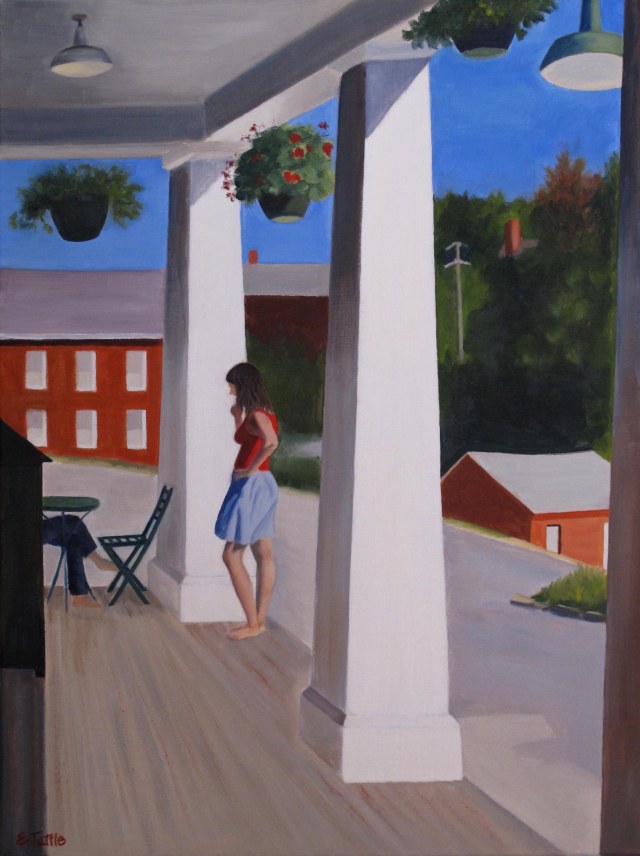
And now it has also become- through Edie’s painting of Miriam- the spirit of Parisville in The Porch of Common Prayer. Miriam on the cover of The Porch of Common Prayer

And that happened- or began to happen- one summer morning, I think it was, because there was sunlight on the porch, and it was warm- yet not too hot, not high midsummer sun, but a nice sunlight, a nice warmth…

Edie happened to have her little digital camera with her- just in case. I think she just had it in mind that she’d like to take a picture of someone, or somethings, or a landscape- I don’t know. Some reference photos. Maybe she had the porch in mind. The porch, that is, of the Harrisville General Store.

Maybe she had those Greek Revival columns. Maybe that beautiful, soft orange of the Harrisville brick. Or maybe someone like Miriam.

I don’t know. I do know, just as there’s always some music in Miriam’s spirit, and I imagine also always sounding in her imagination, her mind’s ear- for Edie there are always images, and colors. Of people, places, objects.

Or in the same way a writer, this writer- always hears- and sees- in some way- words.

What happened, I do know, was that my lady- for whom vision is so much part of her- saw this other lady- Miriam- in a bright red blouse, a red that matched the geraniums above her in the flowerpots suspended from the store front porch ceiling. Miriam standing there at the other end of the small store’s small porch, chatting with someone she knew…

So… a pretty woman, yes. but also thoughtful, some kind of conversation going on, with this unseen (mostly unseen) other lady who was sitting back to the store front, on the porch, at that little round metal Parisian café sort of table on the far (which was not very far) end of the porch.

And Edie took Miriam’s picture, the red blouse and the red flowers, against the green and the Harrisville orange brick, the dove grey road, the blue sky beyond the far mill building.

And Edie asked Miriam if she could turn that picture- or some version of it, into a painting.

…and Miriam said yes.

She trusted Edie.

…and then, as Harrisville became in my imagination Parisville, and I was wondering- what image, or whom or what- would you want for The Porch of Common Prayer.

…There was that painting of Miriam, the Marianne of Harrisville, become the Marianne of Parisville for The Porch of Common Prayer .

While Miriam of Harrisville goes right on listening to that mysterious but beautiful music in her soul.


© Peter Tuttle, text and photos. all rights reserved.

Posted in Local Heroes | Tagged , , , , , , | Leave a comment

Linda Willett

LindaFilm
         Mostly, Linda Willett wore black. Black not as in the little black dress- I don’t think I ever saw her in a dress- but black as in all business. Black blouses, tailored in an almost Asian, unisex fashion. Linda wasn’t trying to seduce you- or anybody else, especially not the many contractors or government officials she dealt with- with her looks.
         And I doubt that, at any point in her long career in historic preservation in New England, that she ever did.
         That wasn’t the way she worked.
         Nor- so far as I ever noticed, was Linda ever trying to impress you with her power or influence- it was never I’m the important person and you ought to cringeor at least act a little submissive- in dealing with me.
         -Though of course, according to someone who worked with her closely for many years, that did lead to underestimation. Underestimation of Linda’s determination. Her passion to get the job done right. And her willingness to do whatever it took and keep on doing it- to see a job through to the end.
         It wasn’t even that she saw the world, or other people, in black and white- absolutes of goodness and badness- because really, if you want to accomplish anything- working with other people- you pretty much have to take people as they come. Figure out what they’re good at and, if you can, make it possible for them to do their most and their best.
         …And because Linda was so busy doing that, for all the time she was at Historic Harrisville, in its reincarnation and rebirth after she arrived, successively restoring mill building after mill building after mill building after mill building after mill building, to very high historic preservation standards- this isn’t like throwing up a concrete and steel big box in a mall-
         ….and then- and this is part of the job she probably never did have to deal with before- also acting as landlord for what amounted to a small village within a small village- all the small businesses- and the people who owned them, and residential tenants- living in the buildings, working in the buildings, the every day of building repair and maintenance and tenants coming and going and paying rent or not …
         Linda was always, always busy. Her office door was- right on the first floor of the big, restored Granite Mill- first on the left- her office door was not always open- she didn’t leave it open. But if you opened the door, she was almost always there, and she made time for pretty much anyone and everyone. She was there. And she listened. And if something needed to be done about it, she did it.

GraniteMillFilm

           So. In effect that big green door in the Granite Mill leading to Linda’s office, was at once always closed- she wasn’t there for casual conversation- and yet at the same time- always unlocked, always openable. If you needed to talk to Linda, she was there. There was no screen of subordinates between her and everyone who might need to talk to her. She was it.
         Which was why I rarely spoke- at any length- with her. Edie and I didn’t live in Harrisville. We didn’t rent a studio or office or industrial space from Historic Harrisville. And given the large number of people with whom Linda had to speak, or people who had to speak to her- Edie and I weren’t going to waste her time.
         OK, so I’ve mentioned the people who had to speak to her. But there were also the many, many, many governmental agencies with whom Linda had to speak:
         Very- as it turned out- successfully. In Linda’s 16 year tenure at Historic Harrisville, beginning with the major reconstruction and restoration of the Granite Mill- which is the crown jewel of the village buildings- Linda secured grant after grant after grant for the buildings. -The Lady in Black doing her part to keep Historic Harrisville in the black- in part by her persuasively expert grant applications.
         And have you ever tried to secure a grant to do something with government money? It may be one thing, if you already have a lot of money and a professional lobbyist, and expensively connected friends.
         -Something else again if you come from a village of 1500 people, tucked away in the hills where most people don’t even know it’s there- no major or even semi major- nothing but minor roads pass through the center of Harrisville. It is on the way only to Nelson- a town of 600, so deep in the woods that- well, Edie and I get lost every time we go there. I think of it as Deepest Nelson, the Heart of- not darkness- but Lostness. Which is not to say there aren’t many fine people there.
         But, talking about those grants. You have to make the case for them, and then you have to perform- get done whatever you said you’d get done with the money they give you. And this was where the Lady in Black shone…
           The jobs got done. One by one by one by one, Harrisville, the mill village, arose not from the ashes, but from the sagging roofs, the unpointed brick, the rotted window frames, the buildings with foundations giving way…
         You have only to look at the pictures of Harrisville, the mill village, as it was at the end of its working life as working mills. The Colony family, owner of the mills, and who lived right there in the village- the opposite of absentee owners- had managed to keep those mills going, and the mill workers employed, through years and years- decades, really- of frugal operation and deferred maintenance.
         And then, because the buildings spanned a brook becoming a river- Nubanusit Brook- which supplied the water power that originally drove the mills- that’s why they were there- you were dealing, extensively and endlessly with the state officials who oversaw state waterways. You have no choice, when your mill buildings, built to take advantage of all that water, span that brook, with gates and dams and turbines within- that once turned the mill machinery.
           And Linda somehow- it’s her diligence and determination and expertise, the expertise of dealing with people who have a great deal of authority- whose decisions can make or break your ability to restore those mills… even to restoring a turbine that once powered the Granite Mill… working with the people who make the laws governing every body of water in New Hampshire, and for good reason- we need that water unpolluted and not overflowing its banks- flooding isn’t good where people and buildings live, and we need clean water.
         Linda was the person- really, the only person in Historic Harrisville who made sure, day to day, year to year, that Historic Harrisville took care of those two very different constituencies- the people of the village, and the state and federal officials of the great beyond. -For whom Harrisville was- and is- just a speck on the map.
       And Linda, when not in her office- so people could find her there- or so she could find the people she needed to keep the whole show going- when Linda wasn’t in her office, she was walking, always very purposefully, never fast but never slowly, to see whomever she had to see. Whomever was part of the show.
         She was that Lady in Black- I think she even had a black coat in winter. Always greeted us cordially, but if we had a conversation it usually didn’t last longer than the time it took to pass each other- with possibly the briefest of pauses.
         Not mysterious. Reserved in personality. But not mysterious.
       On the contrary. Linda, for the 16 years she directed the restoration of every one of Historic Harrisville’s buildings, she was the face of Historic Harrisville. And she was always there… from the day she came to work for Historic Harrisville, after a 11 year career with Historic New England, to the day she’d retire, Linda was simply always there.
       Edie and I would have liked to have gotten to know her better. But we didn’t want to take her time.
         But in the beauty and accomplishment of that restored village, and in hiring and renting and maintaining the village she rebuilt… just in the sheer joy Edie and I felt in seeing those buildings reborn, and the pleasure of the people who worked and lived in them- we got to know Linda very well.  -Through that extraordinary restoration work over a decade and a half that she directed…
         …and, from managing leaking faucets to that river running through her buildings…she kept it in the black.
         And then- after 16 years- Linda was done. All the buildings- thanks to Linda- were all restored.
         Lots of people wanted her to stay. More than she knew, the years and passion and expertise and endless care that she’d given Harrisville had woven her into the fabric of the community. And will never leave. But what was done was done. Water over the dam doesn’t flow back again.
           And the Lady in Black, who’d done so much for Historic Harrisville, was gone.
2/
           Well, soon anyway. She’d given her notice.
           But you know how sometimes you- or I, anyway- just don’t want things to end? Not that you don’t know that somehow, some way, they will have to end. Edie and I did not know Linda well- though as I’ve said, we’d have liked to. But she really was just too busy. And she lived a good hour away by car, commuting every day, so that was two hours a day on the road. When she got to Harrisville, she had work to do.
         But what an extraordinary accomplishment. Historic Harrisville had hired her when they got the grant- a two million dollar grant- to restore the Granite Mill- but there were all those other grants that followed that went to restore this extraordinary village.
         -To putting it all back together, while preserving the original and recreating accurately, where necessary, the unsaveable. You don’t buy that expertise from just any contractor. You don’t buy the materials or the skill to do it at Home Depot.
         For someone to, hands on, do some of that work and manage the rest- Linda had hired Fred O’Connor, with whom she’d worked for 7 years at the SPNEA, to be her project manager in Harrisville. Fred had done a lot more than paint at the SPNEA- they’d sent him for that year to Scotland to learn preservation methods used in Great Britain- where preservation had been ongoing for centuries before we Americans got the idea.
       So Fred and Linda made an extraordinary team. Fred knew the physical materials, and having been a contractor himself- his painting company painted more than a million lineal feet of piping at the Portsmouth Navy Yard- Fred also understood the world of contracting. -Something you’d better know, given the range and complexity of work restoring those mills required.
       Well, I could go on and on. Because it went on and on. Building after building restored, so that the village, now in 2015, is truly beautiful. Not a beautiful near-ruin.
         And Fred- late afternoons and evenings- Fred told Edie and me the stories, some of the stories… of how it all happened. After hours, we’d talk with him- usually for hours, at the end of his day. Fred lived on site in the mill complex, so that he was- in effect he never stopped working. He was almost always there. Because he chose to be there.
           Fred once tried to explain what made people who do historical preservation different- because it is different. A relatively small world of very highly skilled people who- because of the nature of their work- can spend a lot of time on the road. The buildings that need work are not all in one place. They are- if you’re working for the Society for the Preservation of New England Antiquities- they’re spread out over all New England.
         And that had been the appeal, part of the appeal, of Harrisville for both Linda and Fred: less travel. They’d spent- they’d both spent a decade travelling all over New England. And for Fred especially, that meant living- sometimes for long periods of time- away from home, but at the job site, for as long as those jobs lasted. And Linda, too, spent a lot of time on the road- going to those same properties- and all the others the SPNEA owned- hundreds of them.
         While Harrisville: one place. For Linda to commute.  For Fred to live. And an entire village that needed restoration. That deserved restoration. The village was not just a complete rural New England mill village- it was beautiful. And the Colony family, owners of the mills (and much else) in Harrisville, and the Putnam family, industrialists in the nearby city of Keene- were themselves dedicated to historic preservation. They had founded Historic Harrisville.
         So all the elements were there. It was better- in a way- than Historic Williamsburg, Virginia- which, though much bigger, is a recreation. These Harrisville buildings were the original buildings. Not much changed from their working days.  -Because they hadn’t needed to be changed. Until very recently, they’d been doing the same things they were built originally to do.
         So Harrisville was an extraordinary possibility… and if you have a passion for historic preservation- and it does require a passion- no one does it just because it’s a job. If you have the skills to do preservation- you could get paid a lot more to do a lot simpler work in the commercial world…
       So there they were. These two people, Fred and Linda, who from so many years working together trusted and admired each other. -Different though they were in personalities and skill- their skills were complementary.
         And there Edie and I were, having wandered into Harrisville and become friends with Fred, and also having learned- without trying- something about the chemistry between Fred and Linda that made it all possible- the restoration of that village.
         And now, in late 2015, it was almost over. The buildings were restored. Ready or not, Harrisville was headed for a new, post-Linda era.
         I couldn’t imagine Fred staying around forever afterward. The chemistry, the shared passion for restoration, the long partnership in dedication…
        Just with Linda gone, whatever Fred did in her absence- in some way it was over.
3/
         You knew the Fred and Linda era couldn’t last forever. But it was also true- because they’d become woven into the threads of the village, the threads of the lives of the people in the village- that there were many, many people who didn’t want to see them go. Didn’t want the restoration era to be over.
         Edie and I certainly didn’t want that era to be over. Though- rationally- we had known that- in one way or another- we’d understood that it would end, at least for Fred and Linda. Fred already in his early 60s, Linda in her mid 60s. As Edie and I were.
           And time, if nothing else, does catch up with you…
       …ever try lifting out and then descending a ladder with a 200 pound, 19th century window that needs rebuilding?
         You can go on doing these things. But at some point- your knees, or your back- your something- just isn’t happy.
         So sure, Edie and I didn’t want to see any of it end. That had been Harrisville as we had come to know it and, really, love it. That shared passion for preservation, restoration- that beautiful way that someone’s passion for life expressed itself in some people. Not all people. But some people…
       …for, in the end, the pleasure and well being of anyone near, anyone living in or anyone working in those buildings….
           …all that water, all that River of Life…
                         water over the dam.
© Peter Tuttle, text and photos. All rights reserved.
Posted in Local Heroes | Tagged , , , | Leave a comment

Edie

MiriamMiriam


         It was an old envelope- you could see that- the envelope, though high quality paper, slightly yellowed. And undersized- an undersized envelope, like the kind for cards, note cards, greeting cards. Or courtesy notes.
         And this was a courtesy note- from Josephine Hopper, wife of Edward Hopper, the great American 20th century painter. (You remember Nighthawks, the characters sitting at a late night restaurant counter, the dark outside, the windows- just a dim row of an old brick business block outside, across the street).
         Yes, that Edward Hopper. That Josephine Hopper- or Jo, as her husband and friends called her- who’d sent this handwritten card, maybe 20 years earlier, to Edie’s grandfather Stow Wengenroth- who was less renowned than Hopper (well, most artists are) but who was highly regarded, and a success in his time- and ours. His limited edition black and white lithographs are still sought after, and the one of the Brooklyn Bridge can cost you…
         Well, anyway. This courtesy note from Jo Hopper to Edie’s late grandfather and grandmother- fellow artists, who when the note was written had lived in Greenwich Village, and they visited with the Hoppers, from time to time. Jo- who was not much of a cook- would hold little afternoon teas for friends.
         And Stow and his wife, Edith- my Edie’s namesake- had either reciprocated, and Jo was thanking them- or maybe she was following up on a conversation. This was now a long time ago, years after Hopper died, but only shortly after Jo died.
         …And so Stow speculated, as we all sat around Stow’s kitchen table- looking at this note mysteriously appearing in the mail, years and years- decades as I recall- after it was written. Had Jo’s executor at the Whitney Museum in New York found the note in Jo’s desk- or fallen behind a radiator- and recognized Stow’s name, and simply sent it on, forwarded it on?
         But I mention this all to kind of explain, or convey, what it was like for me- and I’d worshipped Hopper about as long as I was aware of his painting- it did it for me the way no other American painters did- and still does-
           I mention this mystery note suddenly appearing in Stow Wengenroth’s mail, years and years after it was mailed- or written and sealed- but eventually sent, after Jo’s death-
        Well, maybe it had gotten lost in a Post Office for decades, and when they cleaned out or closed the Post Office…
         At the time, it arrived at Stow’s house, in Rockport Massachusetts, where he’d moved, post-Greenwich Village, post-Greenport, Long Island. Edie and I were just married, and I simply had never known, as it gradually dawned on me, anyone who, like Edie, had grown up with art, surrounded by world class art- art painted or printed by her grandfather Gifford Beal, an American Impressionist and also a friend of Hopper’s, and by Stow, the lithographer, and by Edie’s mother, who had been a precocious and very talented watercolorist- made her living with watercolors as a young woman, late 1930s, early 1940s…
         Edie’s mother, Telka (Ackley) Beal was so gifted- not to mention her beautiful face- that the young Andrew Wyeth had asked her to marry him.
         “But we’d never even held hands!” Telka exclaimed still, some 35 years later, and now a mother of three grown children, including Edie- whom I’d married when Edie and I were 21, 22.
         Imagine growing up with an Edward Hopper etching in your grandparents’ upstairs hallway. Nobody mentioned it was there. They were just used to seeing it there… Hopper’s Evening Wind… the nude woman on the bed, the curtains blowing in an open night window…
        In my non artist, middle class youth, I had simply never seen a great artist’s work anywhere outside a museum.
        And yet there it was. And Beals and Wengenroths.
         …The Hopper and the valuable everything else eventually gone, sold as the art appreciated- and so did Edie’s parents’ expenses, living in what had been Gifford Beal’s summer home on Rockport harbor.
         But to climb a stairs, and on the landing see Evening Wind
         Well, all of this as prelude. Prelude to explaining why, how, Edie probably had no choice, was destined to herself eventually become a painter. It ran in her family, and the drive to do it, and she was born with that God given talent that really is just a gift. You’ve got it or you don’t. And that’s all there is to it.
         Doesn’t mean it ever comes easy. You then have to train it. But the drive and the hand and the eye- either they’re there- or not.
         And so, ten years before Edie retired from her corporate job- she worked for General Mills- she began painting every weekend, every vacation. We didn’t go anywhere weekends- well, to St. Paul, maybe. To buy art supplies. But every vacation- and she had a lot- six weeks of vacation by then. We stayed home and Edie painted. Because she knew that when she did retire, she didn’t want to be starting from scratch, given that she’d only have so much time. It’s not as if she was 16 or 26 or even 46.
         So that’s what she did, and that’s what she’s done, and that’s why every book I’ve ever published has Edie’s art on the cover.
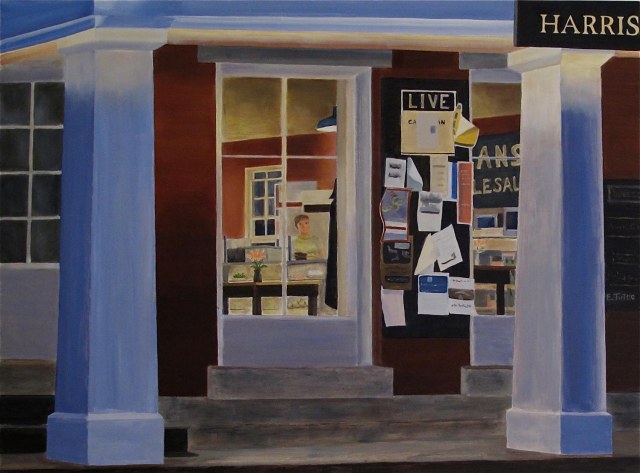
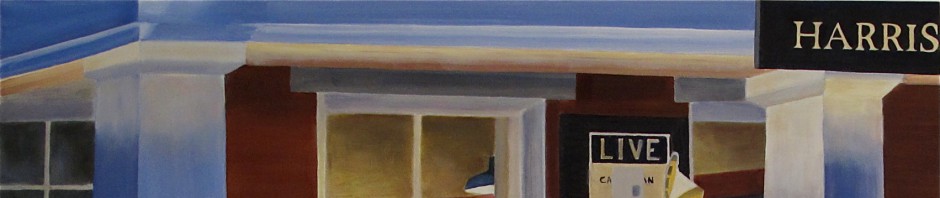
        …Including the header of this website- that’s part of her painting of the Harrisville General Store in early evening, the painting titled Sarah at Dusk. And Miriam, the cover art for The Porch of Common Prayer– a portrait of Miriam Sharrock, who put herself through college working at the Harrisville General Store.
SarahAtDuskSarah at Dusk
        And I’m so proud of Edie- for many, many reasons. But what a pleasure and thrill, now, to walk into a room- almost any room, or into her studio, and see an original Edith Tuttle painting.
         More thrilling than seeing that Hopper at the head of her parents’ stairs.
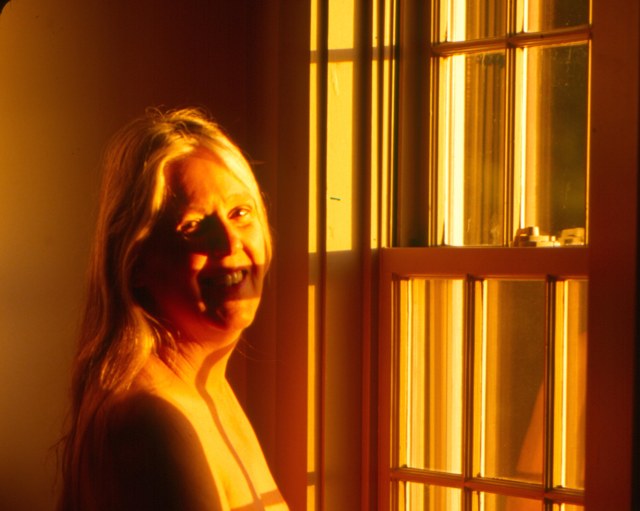
         Though not as thrilling as seeing Edie herself- her smile, the light in her hair, the warmth in her eyes, and her warm embrace…
       …my evening wind.
 EdieFilm
All website text and photos © Peter Tuttle; paintings © Edith Tuttle.  All rights reserved.
Posted in Local Heroes | Tagged , , , | 1 Comment

Fred O’Connor

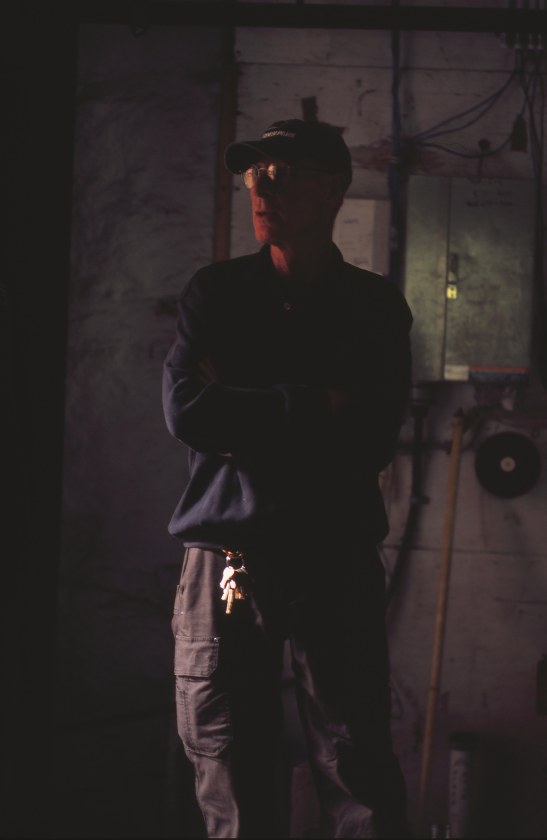
FredFilm
         “The walls talk to you- if you can listen,” Fred O’Connor tells us- Edie and me…
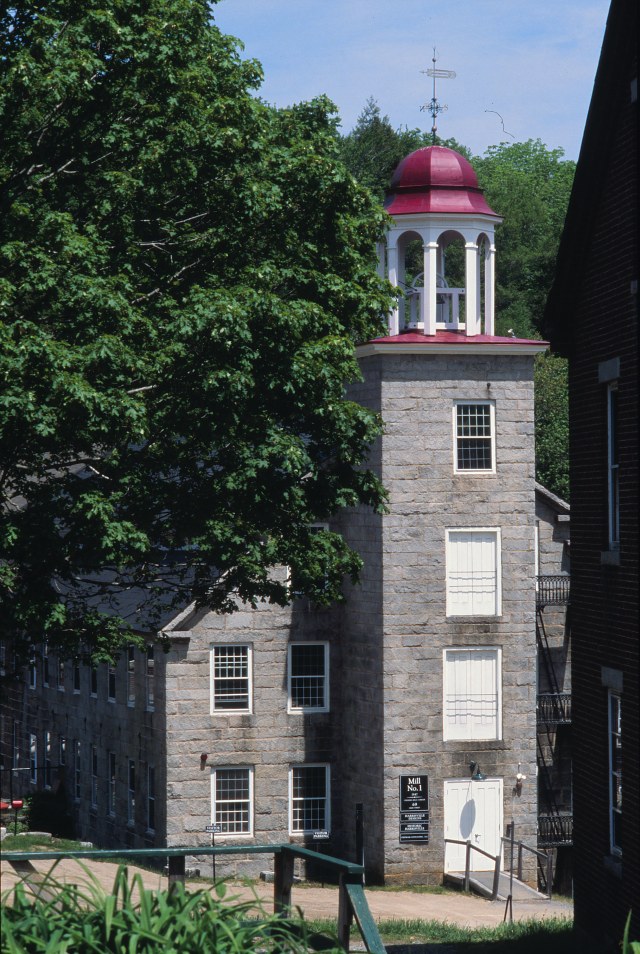
         …as we three stand inside his shop, looking at (listening to?) the 165 year old granite wall- big, regularly sized blocks of granite, quarried in Marlborough, one town away, hauled here one by one, I imagine, by horse or oxen, uphill, to build the Granite Mill, the piece de resistance– to weather, time and technology- in Historic Harrisville.
         The walls talk to you, if you listen.
       I hadn’t thought about old buildings that way, much as I love old buildings. Maybe not all of them. But an awful lot of them.
         And so what a thrill to discover that Fred- full name, Frederick J. O’Connor- felt the same way. Oh, and full title,
                Project Manager, Historic Harrisville
         …as I read from his card, now folded over the little camera eye at the top of the screen on my Apple computer, just so if someone hacks into the computer, they can’t also be watching me- through my own computer, without me knowing a thing about it.
         Modern times, as someone said in another place, another time. The modern times just keep on happening, whether we like them or not.
           So I suppose that the past can be, in some way, some kind of refuge. But it’s also been said- I think by Macauley, a British historian- that a country that doesn’t know its past can’t know its future. -Another way of saying that if you don’t know who you are, you’re probably not going to have much luck in becoming, or continuing to be, the person or country you want to become with the unending passage of time.
         …Well, O’Connor knows who he is. Fred knows who he is. And with the passage of time, Edie and I’ve gotten to know Fred better, and vice versa, with no help from and no need for a little camera in the computer. Rather, we talk face to face, after hours, though Fred can at times seem to work 24/7, Project Manager covering a lot of territory, so to speak, at Historic Harrisville. When it rains- hard– Fred’s out there with his Bobcat, filling in the gullies that the rainwater flowing fast downhill digs into the dirt roads that- still- connect the mill buildings in Historic Harrisville.
         Someone has to do it. And do it somehow. So with his own money, Fred bought and maintains the Bobcat. And it’s a big Bobcat- not one of those little garden machines that some guys buy, rather than Harley Davidsons, in retirement to play around on their mini farms.
          This thing is a piece of industrial equipment. And Fred once lifted a car- gently- carefully, without damage, from the place its owner continued to block passage on one of those dirt roads- day after day- she’d been asked, requested, then warned it was in the way- and Fred left it on the Historic Harrisville loading dock, just sitting there, like a statue on a plinth…
         …until the owner, an otherwise very pleasant young woman- a tenant in one of the old mill buildings- got the message.
         That is a good joke, a bit of physical humor for someone whose life has been devoted to maintaining and restoring large things- historic buildings, mostly. -Beginning as a 10 year old kid when the local painting contractor, in Portsmouth, NH, where Fred grew up, asked, “Do you want a job, Kid?”
         -And the next morning Fred was working for a paint company, doing stuff the painters weren’t interested in doing.  And that led- ultimately- to Fred being the lead painter for the Society for the Preservation of New England Antiquities, now Historic New England- the stewards of some of New England’s finest and most rare historic buildings. And SPNEA- as it was then- sent Fred to MIT for his graduate degree in chemistry (special focus, paint chemistry) so SPNEA would know exactly what was in the 300 year old paint on some of their buildings, and how to replicate it.
           So, yes, Fred’s a painter. But not your average painter.
         And it’s that highly specialized knowledge, and highly specialized years of experience, that make what he does at Historic Harrisville so special. When it comes to the fabric of the buildings- what was there, how they did it, 150, sometimes almost 200 years ago- depending on the building- Fred knows how to listen to the building.
           “And that’s the fun of this job,” Fred tells Edie and me.  He’s talking about listening- but when the buildings speak to him, he’s listening in his own way. Sure, he may hear- I don’t know- the voices of the spirits, talking- of the people who’ve worked within these buildings. Because that’s what- at least within the mill buildings themselves- people mostly did, often long hours, and maybe six days a week. Some of the time.
         And then some of the time, when the water was running low, and the mill still just water powered- no auxiliary electricity- no doubt they didn’t run at all. No rain- no water running- not enough water running in the little brook becoming a river from the mill pond- and your mill machinery didn’t turn. No cloth got woven.
         Now the same buildings hold Harrisville Designs- which makes wooden hand looms and specialty wool yarns to be woven on those looms, and teaches classes in hand weaving- on hand-powered, one person looms- not the mass production of yore- in some of the oldest mill buildings.
       …So there are still voices within the buildings. Women- usually women- learning this ancient hand craft. On the kinds of looms that were displaced by the mechanized looms that once filled these mills…
           But we were talking about the voices of the buildings themselves, speaking in language of not words, but flaking old paint- and of bricks laid in mortar of one kind rather than another. Bricks laid in mortar of the local sand and not so special lime. -Not the mortar in the Granite Mill walls, that it turns out was imported all the way from Rosendale, New York, and used in the finest granite buildings of the time- 1850s- even by the federal government for its granite forts protecting young America’s harbors.
           Who’d have thought? But to listen to that voice- Use this mortar, that’s what I was made of. -Because Rosendale sets in the presence of water, so water- that rushing water that powers this mill- will only strengthen the bonds I make between these huge granite blocks that everything rests upon.
         …Listening to that mortar- a natural cement- with a color- almost pinkish- that Fred had never seen before. And sending it for chemical analysis to Chicago, to Great Britain (where they’ve been preserving buildings for 700 years)… just figuring out what was this pinkish, mystery mortar that had held the Granite Mill together, despite all that water, for 150 years.
         That’s some special kind of listening.
         And listener.
         And that’s Frederick J. O’Connor.
               The building listener.
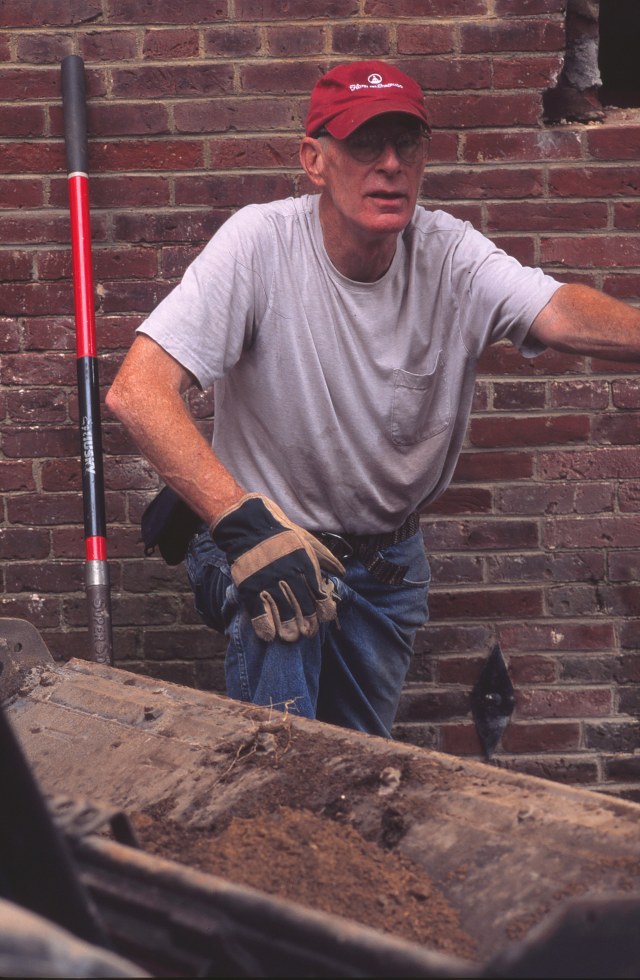
FredJO
 
All website text and photos © Peter Tuttle/ all rights reserved.  Header image© Edith Tuttle.
      
Posted in Local Heroes | Tagged , , , | Leave a comment